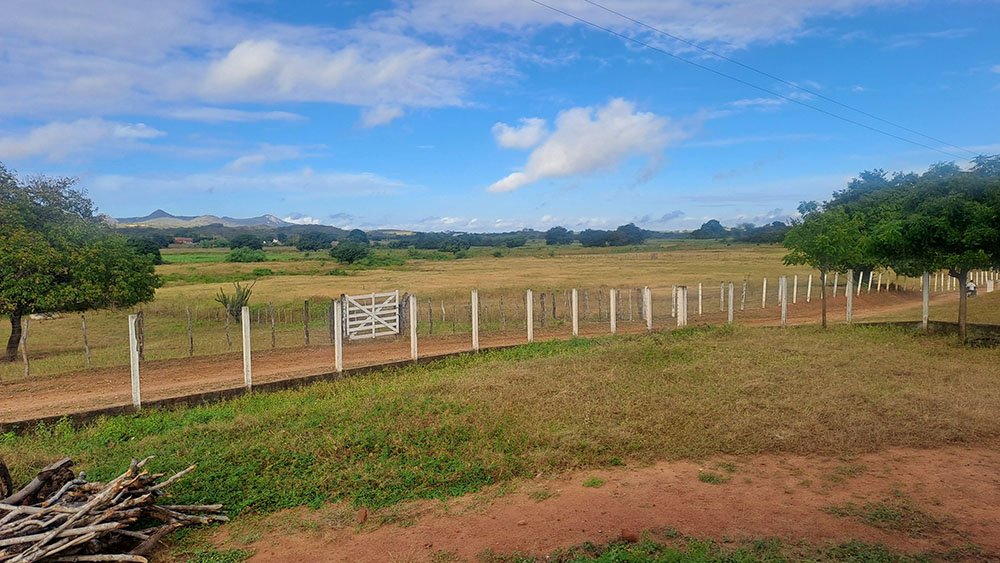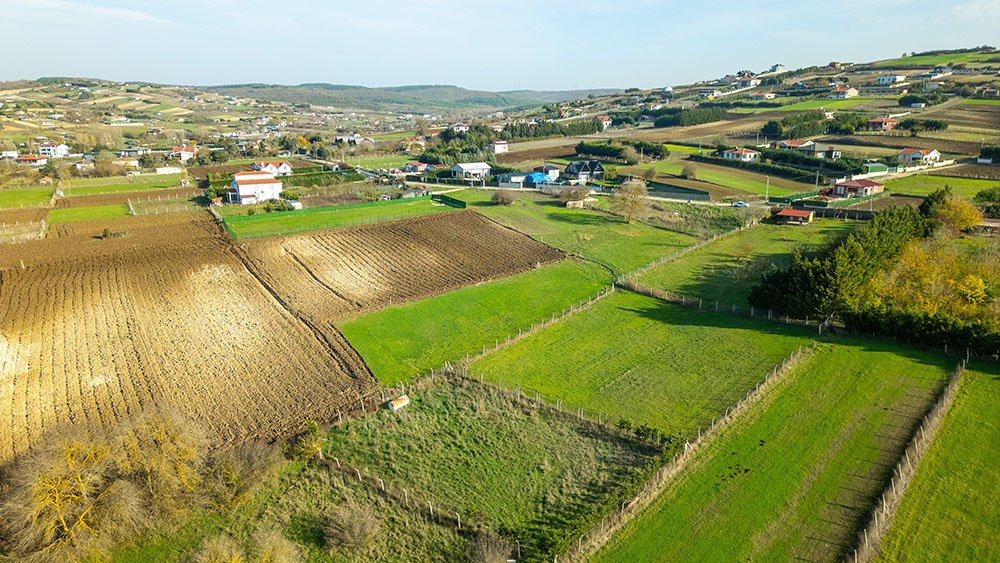
Buying land is primarily a location decision. The same amount of money can buy very different types of land depending on the city, district, village, road connectivity, land classification, development activity, and surrounding infrastructure.
For this reason, searching for the best places to buy land in India should not simply mean choosing a famous city or a location with a low price. A good location for a residential plot may not be suitable for agricultural land, while land near an industrial corridor may have very different considerations from a weekend farmhouse plot.
This guide explains how to research locations across India and identify areas that may suit your specific land-buying objective. On LandBazaar.in, buyers can use location, land type, size, budget, and other requirements to narrow down suitable properties before beginning detailed due diligence.
Important: There is no single "best" location for every land buyer. The appropriate location depends on the intended use, budget, legal eligibility, accessibility, development conditions, and individual requirements.
What Makes a Good Location to Buy Land?
A good land location generally combines several factors rather than relying on one feature.
Some of the most important factors include:
- Connectivity and road access
- Existing development
- Nearby residential or commercial activity
- Availability of basic infrastructure
- Land-use classification
- Legal and ownership status
- Plot size and shape
- Road frontage
- Distance from important destinations
- Local demand
- Development restrictions
- Flooding and drainage conditions
- Availability of water and electricity
- Purchase price and transaction costs
- Suitability for the intended use
Property valuation systems also consider factors such as location, property usage, development zones, road connectivity, government regulations, economic activity and future benefits.
Therefore, location research should go much deeper than simply asking, "What is the land price per square foot?"
How to Research the Best Places to Buy Land in India
Before looking at specific locations, define what you actually want to do with the land.
Step 1: Define Your Purpose
Your objective should determine the type of location you research.
For example:
PurposeLocation Characteristics to ResearchResidential houseEstablished or developing residential areasVilla constructionPlanned layouts, gated communities and suburban areasAgricultural useSuitable agricultural zones, soil, water and accessFarmhouseLarger parcels with suitable access and permitted useCommercial developmentMain roads, markets, population and commercial activityWarehouseHighways, logistics corridors and industrial areasIndustrial useIndustrial zones and infrastructureLong-term holdingAreas with sustainable development potentialWeekend propertyAccessible outskirts and suitable surroundings
A location that works for one purpose may be unsuitable for another.
1. Major Metropolitan Areas
India's major metropolitan regions can offer a wide range of land opportunities, particularly around established urban areas and their outer growth zones.
Examples include areas surrounding:
- Delhi NCR
- Mumbai Metropolitan Region
- Bengaluru
- Hyderabad
- Chennai
- Pune
- Kolkata
- Ahmedabad
However, land within established metropolitan areas can be expensive and may have significant development and zoning restrictions.
For many buyers, the research opportunity may therefore extend beyond the established city into surrounding suburbs, peripheral areas and satellite towns.
What to Research
Look at:
- Existing development
- Road and public transport connectivity
- Employment centres
- Residential expansion
- Industrial activity
- Commercial development
- Infrastructure projects
- Planning regulations
- Availability of legally developable land
Do not assume that land on the outskirts of a major city will automatically appreciate. Development plans, actual infrastructure execution, legal status and demand should all be independently examined.
2. Emerging Suburbs and City Outskirts
City outskirts are frequently considered by buyers looking for a balance between accessibility and land cost.
These areas may include:
- Peripheral residential zones
- New layouts
- Satellite towns
- Suburban villages
- Areas along major roads
- Areas near expanding employment centres
The important distinction is between existing development and claimed future development.
A seller may advertise a property as being close to a future airport, highway, industrial park or business district. Such claims should be checked against authoritative planning or government information before they influence your purchase decision.
Research Questions
Ask:
- What infrastructure exists today?
- What roads are currently operational?
- What residential development already exists?
- Are utilities available?
- What is the official land-use classification?
- Is development legally permitted?
- Are there planning restrictions?
- Is the advertised future infrastructure officially confirmed?
- How accessible is the property at present?
3. Land Near Major Highways
Land near major highways can attract interest because connectivity can influence accessibility and commercial activity.
Potential uses may include:
- Commercial establishments
- Restaurants
- Warehouses
- Logistics facilities
- Industrial activity
- Hospitality
- Agricultural operations
- Certain residential developments
However, being close to a highway does not automatically mean the property has legal highway access.
You should verify:
- Exact road frontage
- Approach road
- Right of way
- Access permissions
- Road-widening proposals
- Setback requirements
- Land-use classification
- Whether the connecting road is public or private
The exact distance from a highway is also less important than the quality and legality of access to the property.
4. Industrial Corridors and Manufacturing Zones
Industrial corridors and manufacturing clusters can be relevant for buyers looking for industrial land, warehouses or supporting commercial properties.
Potential location indicators include:
- Existing industrial estates
- Manufacturing clusters
- Logistics hubs
- Freight connectivity
- Warehousing activity
- Major highways
- Rail connectivity
- Airports or ports where relevant
- Availability of utilities
- Planned industrial infrastructure
But industrial land requires particularly careful land-use verification.
A parcel located near factories is not automatically industrial land. The official classification, zoning and permitted activities must be verified before purchase.
5. Tier-2 Cities
Tier-2 cities can offer a different land-buying environment from India's largest metropolitan areas.
Cities such as:
- Jaipur
- Lucknow
- Indore
- Chandigarh region
- Coimbatore
- Nagpur
- Kochi
- Bhubaneswar
- Visakhapatnam
- Surat
- Vadodara
- Mysuru
- Vijayawada
- Nashik
- Madurai
- Thiruvananthapuram
may be worth researching depending on your objective.
The important point is not to treat every Tier-2 city as equally suitable. Each city has different development patterns, planning regulations, employment centres, infrastructure and land markets.
What to Compare
Compare:
- City population and expansion
- Employment centres
- Residential development
- Industrial activity
- Road connectivity
- Airport/rail connectivity
- Land availability
- Local development plans
- Current land prices
- Existing neighbourhoods
6. Satellite Towns
Satellite towns can be particularly interesting for buyers who want access to a major city without purchasing land in the city's most expensive areas.
A satellite town may have:
- Lower land costs than the central city
- Planned residential development
- New roads
- Commercial centres
- Educational institutions
- Industrial or employment zones
- Better availability of larger plots
But the quality of the opportunity depends heavily on actual connectivity.
A satellite town that is technically close to a major city but poorly connected may be less practical than a slightly more distant location with reliable roads and public infrastructure.
7. Agricultural Regions
For agricultural land, the criteria are completely different from those used for urban residential plots.
Important factors include:
- Soil quality
- Water availability
- Irrigation
- Rainfall
- Existing cultivation
- Agricultural access roads
- Electricity availability
- Land size
- Topography
- Flood risk
- Distance to markets
- Storage and transportation access
Buyers should also verify whether the land is legally transferable to them and whether there are state-specific restrictions on agricultural land ownership or use.
Agricultural land should not be evaluated solely on its price per acre.
A cheaper parcel with poor water availability or difficult access may be less suitable for agricultural use than a more expensive parcel with reliable irrigation and better connectivity.
8. Areas Near Airports
Land around airports can attract interest because airports can influence regional connectivity and surrounding development.
However, airport proximity requires additional caution.
Research:
- Existing airport access
- Airport expansion plans
- Land-use restrictions
- Building-height restrictions
- Noise considerations
- Road connectivity
- Proposed infrastructure
- Restricted or controlled zones
Do not buy land simply because a seller says that a new airport is coming nearby. Verify the status of any proposed project through reliable official sources.
9. Areas Near Railway and Transport Hubs
Railway stations, bus terminals, logistics centres and other transportation hubs can influence commercial activity.
Such locations may be relevant for:
- Shops
- Offices
- Warehouses
- Hotels
- Restaurants
- Rental properties
- Transport-related businesses
However, highly accessible locations may also have higher land prices, greater congestion and more development restrictions.
Research the exact distance and road connection rather than relying on a listing description such as "near railway station."
10. Tourism and Hospitality Locations
Tourism-driven regions can be relevant for buyers considering hospitality, holiday homes, resorts or other tourism-related uses.
Potential categories include:
- Hill stations
- Beach destinations
- Heritage towns
- Pilgrimage destinations
- Wildlife tourism regions
- Cultural destinations
- Resort belts
Examples of tourism-oriented regions can be found across states such as Goa, Kerala, Rajasthan, Uttarakhand, Himachal Pradesh, Tamil Nadu and Karnataka.
But tourism demand alone does not establish development rights.
Before purchasing, verify:
- Land classification
- Construction permissions
- Environmental restrictions
- Access roads
- Water availability
- Local development rules
- Applicable coastal, forest or protected-area restrictions
11. Land Near Educational and Employment Hubs
Areas surrounding universities, technology parks, industrial estates, hospitals and large employment centres can have substantial daily activity.
For residential or rental-oriented land research, consider:
- Distance to employment hubs
- Distance to educational institutions
- Housing demand
- Road connectivity
- Public transport
- Existing residential development
- Availability of services
The key is to research actual demand rather than assuming that any location near a large institution will perform equally.
12. Developing Rural Areas Near Cities
Some buyers specifically look for larger parcels outside cities.
These locations can offer:
- Larger land parcels
- Lower entry prices in some markets
- Agricultural opportunities
- Farm-related uses
- More open surroundings
- Potential access to expanding urban markets
However, rural land requires particularly careful due diligence.
Check:
- Survey number
- Record of Rights
- Ownership
- Encumbrances
- Land classification
- Access
- Boundaries
- Agricultural restrictions
- Conversion requirements
- Local planning rules
The Department of Land Resources notes that land administration remains primarily within the domain of States, so land-related procedures and records can differ significantly from one state to another.
13. Coastal Locations
Coastal land can be attractive for residential, tourism and commercial purposes, but it requires additional research.
Buyers should investigate:
- Coastal regulations
- Development restrictions
- Flooding
- Erosion
- Drainage
- Access
- Land classification
- Environmental restrictions
- Construction permissions
A visually attractive coastal parcel may not necessarily be suitable for construction.
14. Hill and Mountain Locations
Hill regions can be appealing for homes, tourism projects and larger recreational properties.
However, terrain creates additional considerations.
Check:
- Slope
- Soil stability
- Road access
- Drainage
- Water supply
- Landslide risk
- Construction restrictions
- Forest-related restrictions
- Local planning regulations
The usable portion of a sloping parcel can be significantly different from its total recorded area.
How to Compare Different Locations
Instead of asking simply:
"Which city has the cheapest land?"
create a location comparison based on your requirements.
FactorLocation ALocation BLocation CLand priceRoad accessDistance from cityExisting developmentLand useWater availabilityElectricityNearby infrastructureEmployment activityLegal restrictionsPlot availabilityDevelopment potentialFlood/drainage riskSuitability for purpose
This creates a more useful comparison than focusing on price alone.
How to Research a Location Before Buying Land
1. Start With the Exact Village or Locality
Do not stop at the city name.
Research:
State → District → Mandal/Taluka/Tehsil → Village → Locality → Survey Number
The exact parcel matters more than the broader city label.
2. Check Land Records
Land records can help establish important information about ownership and the parcel.
Depending on the state, records may include:
- Record of Rights
- Survey details
- Mutation records
- Ownership information
- Land classification
- Cadastral maps
- Registration information
The Government of India's DILRMP is intended to modernize land records and improve access to land information, although implementation and record systems remain state-specific.
3. Check the Parcel Map
Do not rely exclusively on the seller's site plan.
Compare:
- Cadastral map
- Survey number
- Physical boundaries
- Road position
- Adjacent properties
- Recorded area
Where available, digital and georeferenced land information can provide additional reference points.
ULPIN, or Bhu-Aadhaar, is being rolled out as a unique identification system for land parcels; the Department of Land Resources reports implementation across multiple States/UTs, with pilot testing in others.
4. Check the Legal Status
Before paying a substantial advance, investigate:
- Title
- Previous sale deeds
- Encumbrances
- Mortgages
- Court cases
- Government acquisition
- Restrictions on transfer
- Land classification
- Pending disputes
The Department of Land Resources has also been working toward linking court information with land records and registration databases so that property-related dispute information can be more accessible.
For an important transaction, a qualified property lawyer should independently review the documents.
5. Check the Land Use
Land may be classified as:
- Agricultural
- Residential
- Commercial
- Industrial
- Institutional
- Forest
- Government land
- Other restricted categories
Do not assume that purchasing agricultural land automatically gives you the right to construct a house, resort, warehouse or commercial building.
Where conversion or planning permission is required, investigate the process and eligibility before purchasing.
6. Check Road Connectivity
Evaluate the actual road rather than the distance shown on a map.
Check:
- Road width
- Road ownership
- Approach road
- Frontage
- Public access
- Seasonal accessibility
- Proposed widening
- Right of way
A property described as "near the main road" may still have a difficult or legally uncertain approach.
7. Check Water and Electricity
Infrastructure can have a major effect on the practicality and development cost of land.
Check:
- Existing electricity connection
- Distance to power infrastructure
- Water source
- Borewell feasibility where relevant
- Irrigation availability
- Drainage
- Sewage arrangements
- Mobile/network connectivity
For agricultural land, water availability can be particularly important.
8. Check Government Valuation Information
Government valuation systems can provide useful reference information.
NGDRS allows valuation information to be searched based on location and land type in participating implementations, while its documentation describes valuation factors such as location, usage, development zones and road connectivity.
However, a government valuation or guidance value should not automatically be treated as the actual market price.
Actual transaction prices can differ because of location-specific characteristics, demand, access, development and property condition.
Best Location by Land Type
There is no universal best location, but the research priorities differ by land type.
Residential Plots
Look for:
- Existing residential development
- Good roads
- Schools and hospitals
- Employment centres
- Water and electricity
- Clear residential land-use status
Villa Plots
Look for:
- Planned layouts
- Larger plot sizes
- Reliable access
- Residential permissions
- Nearby infrastructure
- Community development
Commercial Land
Look for:
- High visibility
- Road frontage
- Population density
- Commercial activity
- Parking/access
- Appropriate commercial permissions
Industrial Land
Look for:
- Industrial zoning
- Highway connectivity
- Logistics access
- Utilities
- Labour availability
- Existing industrial ecosystem
Agricultural Land
Look for:
- Soil
- Irrigation
- Water
- Farm access
- Agricultural suitability
- Appropriate ownership eligibility
Highway Land
Look for:
- Legal access
- Frontage
- Traffic exposure
- Commercial suitability
- Road-widening considerations
How Budget Changes Your Location Options
Your budget should be calculated as a total acquisition budget rather than only the quoted land price.
Consider:
- Land purchase price
- Stamp duty
- Registration charges
- Brokerage
- Legal review
- Survey
- Documentation
- Conversion charges where applicable
- Development costs
- Fencing
- Road access
- Electricity
- Water
- Site preparation
A parcel that appears cheaper initially may require significant expenditure before it becomes usable.
Why the Cheapest Land Is Not Always the Best Choice
Very low-priced land can sometimes reflect issues such as:
- Poor connectivity
- Agricultural classification
- Legal restrictions
- Unclear title
- Difficult terrain
- Lack of utilities
- Flood risk
- Limited development potential
- Access problems
- Remote location
Price should therefore be evaluated alongside usability and legal status.
Red Flags When Researching a Location
Be cautious when you encounter:
- "Guaranteed appreciation"
- "Future airport coming soon"
- "Highway coming next year"
- "Government-approved" without documents
- "No registration problems"
- "No need for lawyer"
- "Very low price for urgent sale"
- "Conversion will happen automatically"
- "Only token advance required today"
- "Land is close to highway" without clear access
These statements should be independently verified rather than accepted as facts.
Common Mistakes Buyers Make
Choosing a City Instead of a Specific Location
A city can contain very different land markets.
Focusing Only on Price
Cheap land can have expensive access, development or legal problems.
Assuming Future Development
Proposed infrastructure should be verified through reliable sources.
Ignoring Land Classification
The intended use may not be legally permitted on every parcel.
Not Visiting the Property
Maps and photographs cannot replace physical inspection.
Ignoring Boundaries
The area described by a seller may not match the recorded parcel.
Assuming Road Access
Physical access and legally recognized access are not always the same.
Skipping Legal Due Diligence
A low price is not compensation for an unresolved title or dispute.
How LandBazaar.in Can Help With Location Research
LandBazaar.in can be used as a starting point for discovering land opportunities across different locations and land categories.
Buyers can research properties based on factors such as:
- State
- City
- District
- Locality
- Land type
- Plot size
- Budget
- Road connectivity
- Intended use
The platform should be treated as a property-discovery marketplace rather than a substitute for legal, survey or government verification.
Before completing a transaction, buyers should independently verify the property documents, ownership, land classification, boundaries, access and applicable local regulations.
Location Research Checklist
Before shortlisting a land location, ask:
Location
- Is the location suitable for my purpose?
- How far is it from the nearest city?
- Is the approach road usable?
- What infrastructure already exists?
Land
- What is the exact survey number?
- What is the recorded area?
- What is the land classification?
- Are the boundaries clear?
Legal
- Is the title clear?
- Are there encumbrances?
- Are there pending disputes?
- Are there restrictions on transfer?
Development
- Is construction or the intended use permitted?
- Is conversion required?
- Are there planning restrictions?
- Are infrastructure claims officially supported?
Practical
- Is water available?
- Is electricity available?
- Is drainage adequate?
- Is the land affected by flooding?
- Is the terrain suitable?
Financial
- What is the total acquisition cost?
- What are the registration and other transaction costs?
- Are development expenses required?
- How does the asking price compare with similar properties?
Frequently Asked Questions
Which are the best places to buy land in India?
There is no single best location for every buyer. The appropriate location depends on whether the land is intended for residential use, agriculture, commercial development, industrial activity, a farmhouse, or long-term holding.
Is it better to buy land in a city or outside the city?
Both can have different advantages and risks. Urban land may offer stronger existing infrastructure but can be more expensive, while peripheral or rural land may offer larger parcels or different price points but can involve additional access, zoning and development considerations.
Which type of location is suitable for agricultural land?
Look for locations with suitable soil, reliable water, irrigation, agricultural access, appropriate land classification and legal eligibility for the intended buyer and use.
Is land near a highway always valuable?
Not necessarily. Highway proximity can be useful, but legal access, frontage, zoning, road-widening requirements and surrounding development also matter.
How do I compare land prices in different locations?
Compare similar properties based on land type, size, road access, location, permitted use, infrastructure, legal status and development conditions. Comparing only the quoted price per square foot or acre can be misleading.
How can I verify land records?
Land records are maintained through state-specific systems. The Department of Land Resources provides links and information relating to state/UT land-record services, while DILRMP supports digitization and modernization of land records.
Should I buy land based on future development plans?
Future development should be treated as a research factor rather than a guarantee. Verify proposed infrastructure, planning status, approvals and implementation through authoritative sources.
Does ULPIN exist for every property in India?
ULPIN implementation is being rolled out across States and Union Territories at different stages. The Department of Land Resources reports rollout in multiple States/UTs and pilot implementation in others, so buyers should check the applicable state system.
Should I hire a lawyer before buying land?
For a significant land purchase, independent legal review is advisable. A lawyer can examine title documents, encumbrances, transfer restrictions and other legal issues relevant to the particular property and state.
Final Thoughts
Finding the best places to buy land in India is less about identifying one city and more about identifying the right parcel in the right micro-location for your intended purpose.
A strong location research process should examine connectivity, existing development, infrastructure, land use, ownership, legal status, boundaries, water, utilities, planning restrictions and total acquisition cost.
Instead of asking only "Where is land cheap?", ask:
"Where can I legally and practically use this land for my intended purpose at a price that fits my budget?"
That question leads to a much more useful land-buying decision.
LandBazaar.in can help buyers discover land opportunities across India, but every shortlisted property should go through independent document verification, physical inspection and appropriate legal and technical due diligence before purchase.