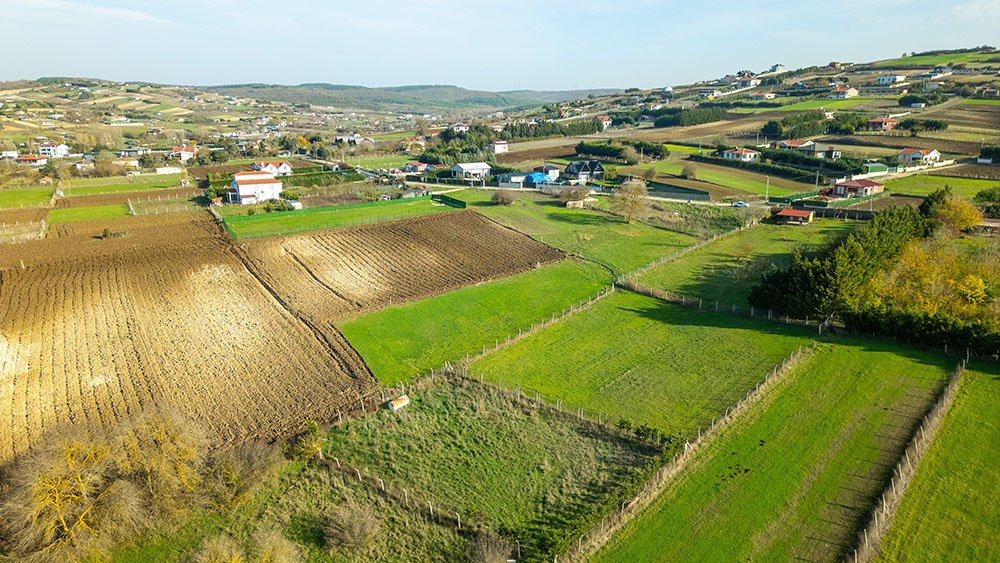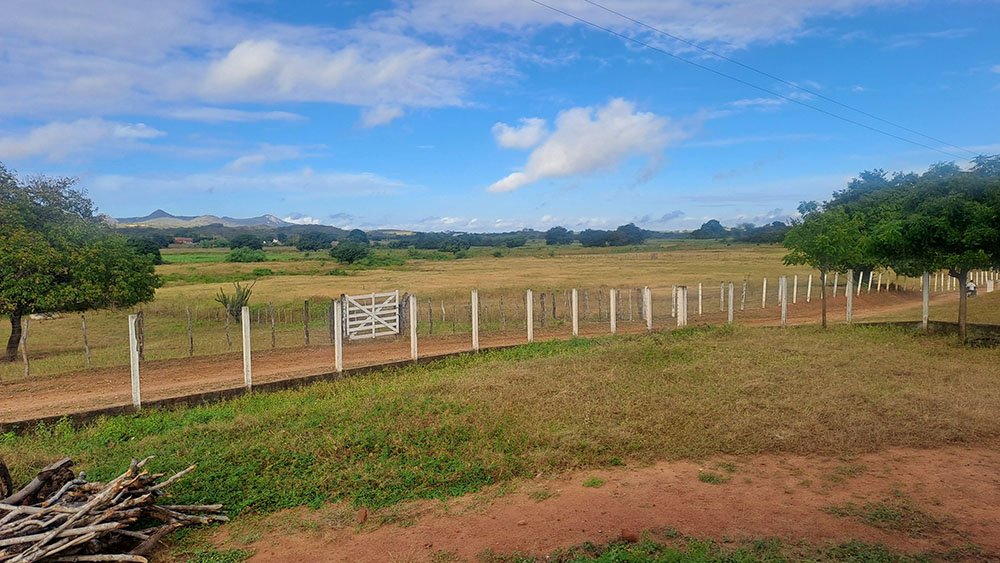
Finding land for sale in India no longer has to begin with visiting multiple brokers or driving around different localities looking for "For Sale" boards. Online property marketplaces allow buyers to discover land, compare locations, review property details and contact sellers before making a physical visit.
LandBazaar.in is designed specifically around land, making it easier to search for different types of land across India, including agricultural land, residential plots, villa plots, open plots, commercial land, industrial land and highway land.
However, finding a listing online is only the first step. A serious land purchase requires careful research, document verification, physical inspection and completion of the applicable legal and registration process.
This guide explains how to find land for sale online in India with LandBazaar.in, how to narrow down your search, what information to look for, how to compare properties and what to verify before buying.
Why Search for Land Online?
Searching online gives buyers the ability to research a much larger number of properties before deciding which ones are worth visiting.
Instead of limiting your search to one local broker or one neighborhood, you can explore properties across different:
- States
- Districts
- Cities
- Towns
- Villages
- Localities
- Land categories
- Price ranges
- Plot sizes
Online research can also help buyers understand the differences between locations before committing to a particular property.
The Government of India's Digital India Land Records Modernization Programme (DILRMP) is also focused on improving digital access to land records and modernizing land-record management.
This does not mean that every property can be completely verified online, but it does make the initial research process considerably more convenient.
What Types of Land Can You Find Online?
One of the biggest advantages of a dedicated land marketplace is the ability to search according to land type.
Agricultural Land
Agricultural land may be suitable for farming or other permitted agricultural purposes.
Buyers should research:
- Soil
- Water availability
- Irrigation
- Land classification
- Road access
- Agricultural restrictions
- Ownership eligibility
Agricultural land should not automatically be assumed to be available for residential or commercial construction.
Residential Plots
Residential plots are generally searched by buyers who want to construct a house or pursue permitted residential development.
Look for:
- Residential land use
- Layout status
- Road access
- Plot dimensions
- Water
- Electricity
- Nearby development
- Applicable approvals
Villa Plots
Villa plots can be suitable for buyers looking for larger residential plots, particularly in planned communities or gated developments.
Before purchasing, independently verify:
- Ownership
- Layout documentation
- Development permissions
- Roads
- Utilities
- Applicable land-use rules
Open Plots
Open plots can be found in both developed and developing areas.
When comparing open plots, look beyond the asking price and investigate:
- Location
- Road width
- Plot dimensions
- Frontage
- Land classification
- Surrounding development
- Access
- Development restrictions
Commercial Land
Commercial land may be relevant for:
- Shops
- Offices
- Showrooms
- Restaurants
- Hotels
- Other permitted commercial uses
Visibility, road frontage, access and commercial permissions can be particularly important.
Industrial Land
Industrial land is generally evaluated based on:
- Industrial zoning
- Road connectivity
- Utilities
- Logistics
- Nearby industrial activity
- Permitted activities
- Applicable environmental and planning requirements
A property being located near an industrial area does not automatically make it industrial land.
Highway Land
Land near highways can attract buyers interested in:
- Restaurants
- Hotels
- Warehouses
- Logistics
- Commercial activity
- Other permitted uses
But highway proximity does not automatically mean legal highway access.
Always verify the actual approach road, frontage, access rights and relevant restrictions.
How to Start Searching for Land on LandBazaar.in
A good land search starts with clearly defining your requirements.
Before browsing listings, decide:
Location
Where do you want to buy?
Land Type
What kind of land do you need?
Budget
What is your maximum purchase budget?
Area
How much land do you require?
Purpose
What do you intend to do with the land?
Connectivity
How important are highways, city roads, airports, railway stations or other infrastructure?
Once these requirements are clear, the search becomes much easier.
Step 1: Choose Your Preferred Location
Start broad and then narrow your search.
For example:
India → Telangana → Hyderabad → Specific Locality
or
India → Karnataka → Bengaluru → Specific Area
You can also research land in smaller cities, towns and villages depending on your requirements.
Do not assume that the city name tells you everything about a property.
A large city may contain:
- Established neighborhoods
- Suburbs
- Peripheral villages
- Industrial areas
- Agricultural zones
- Developing layouts
- Restricted areas
The exact locality and parcel should therefore be investigated.
Step 2: Search According to Land Type
If your objective is known, use it to narrow the search.
For example:
Residential requirement → Residential plots
Farming requirement → Agricultural land
Factory requirement → Industrial land
Business requirement → Commercial land
Large countryside property → Farm/agricultural land
This prevents you from wasting time reviewing properties that do not match your intended use.
Step 3: Set Your Budget
Budget is one of the most important filters when searching for land.
However, don't calculate your budget using only the seller's asking price.
Your total acquisition budget may also need to account for:
- Stamp duty
- Registration charges
- Legal fees
- Survey costs
- Brokerage
- Documentation
- Conversion charges where applicable
- Development expenses
- Fencing
- Water
- Electricity
- Road/access improvements
The exact costs vary by state and property.
Step 4: Compare Plot Sizes
Land listings can use different units, including:
- Square feet
- Square yards
- Square metres
- Acres
- Hectares
- Local land-measurement units
Make sure you compare properties using the same unit.
For example, don't compare the price of a 200-square-yard plot directly with the price of a 1-acre property without converting the measurements.
Step 5: Examine the Location
Once you find a property that matches your basic requirements, research the location carefully.
Look at:
- Main roads
- Approach roads
- Nearby settlements
- Schools
- Hospitals
- Markets
- Employment centres
- Industrial areas
- Public transport
- Water infrastructure
- Electricity
- Existing development
The surrounding area can be just as important as the land itself.
Step 6: Look Beyond the Pin on the Map
A map location is useful, but it doesn't tell the whole story.
A property may appear close to a major road while having:
- A narrow approach road
- Private access
- An unpaved road
- Seasonal access
- An unclear right of way
Visit the property and verify the actual route.
Step 7: Compare Multiple Land Listings
Do not immediately select the first property you find.
Shortlist several properties and compare them.
FactorProperty AProperty BProperty CLocationLand typeAreaAsking pricePrice per sq ft/yardRoad accessFrontageLand useWaterElectricityDevelopmentDocumentsSite visit
This gives you a more objective picture of the available options.
How to Calculate the Land Price
One of the simplest ways to compare listings is to calculate the price per unit of area.
Formula
Price per square foot = Total Asking Price ÷ Total Area in Square Feet
For example:
If a plot is listed for ₹60 lakh and measures 3,000 sq ft:
₹60,00,000 ÷ 3,000 = ₹2,000 per sq ft
This allows you to compare properties of different sizes.
But price per square foot should never be the only comparison.
A property with a lower rate may have:
- Poor access
- Less frontage
- Different land classification
- Fewer utilities
- More development costs
- Legal restrictions
How to Identify a Good Land Listing
A useful listing should provide enough information for you to understand the basic property.
Look for:
- Clear property title/category
- Accurate location
- Land area
- Asking price
- Property photographs
- Road information
- Nearby landmarks
- Seller contact details
- Property description
- Available documentation
Listings with very little information should be treated as preliminary leads rather than verified opportunities.
Questions to Ask the Seller
Before arranging a site visit, ask the seller some basic questions.
Ownership
- Are you the registered owner?
- Are there multiple owners?
- Is the property inherited?
- Is there a power of attorney involved?
Property
- What is the survey number?
- What is the exact area?
- What are the boundaries?
- What is the land classification?
Legal
- Is there any mortgage?
- Is there any court case?
- Is there any acquisition issue?
- Are there any encumbrances?
- Are there any restrictions on transfer?
Access
- Is the road public?
- What is the road width?
- Is there a registered right of way?
- Does the property have direct road frontage?
Development
- What use is currently permitted?
- Is conversion required?
- Are there applicable planning restrictions?
Price
- What is the total asking price?
- Is the price negotiable?
- Are there any outstanding dues?
Ask for Documents Before Paying an Advance
A buyer should not rely solely on the online listing.
Depending on the state and property, ask to review relevant documents such as:
- Sale deed
- Previous title documents
- Record of Rights
- Mutation records
- Encumbrance-related records
- Survey documents
- Cadastral map
- Tax receipts
- Conversion documents where applicable
- Layout/development approvals where relevant
The exact document requirements vary by property and state.
Verify Land Records Online
India has made significant progress in digitizing land records.
DILRMP covers activities including:
- Computerization of Records of Rights
- Digitization of cadastral maps
- Computerization of registration
- Integration of registration and land records
- Survey and resurvey
- Revenue court computerization
Buyers should use the applicable official state or Union Territory land-record system when checking government information.
Digital records can support your research, but they should not be treated as a substitute for professional title verification.
Check ULPIN or Bhu-Aadhaar Where Available
The Government of India is developing the Unique Land Parcel Identification Number (ULPIN) system, also known as Bhu-Aadhaar.
According to the Department of Land Resources, ULPIN is a 14-digit identification number based on the geographic coordinates of a parcel and geo-referenced cadastral maps.
The system has been rolled out in multiple States/UTs, while pilot implementation has also occurred in others, so availability should be checked for the relevant location.
Where available, parcel identification information can be another useful reference during land research.
Verify the Survey Number
The survey number is one of the most important pieces of information in a land transaction.
Compare the survey number shown by the seller with:
- Land records
- Sale deed
- Survey map
- Property location
- Physical boundaries
If the survey number or sub-division number does not match across documents, stop and investigate the discrepancy before proceeding.
Check the Land Classification
Never assume that the intended use is automatically permitted.
A listing might say:
"Perfect for farmhouse."
That does not by itself establish that construction is legally permitted.
Similarly:
"Commercial land near highway."
does not necessarily mean the parcel is commercially zoned.
Check the official land classification and applicable local planning rules.
Visit the Property
Online research should lead to a physical inspection.
During the visit, check:
Property Boundaries
Do the physical boundaries match the documents?
Road Access
Can you actually reach the property using the stated road?
Surroundings
What is around the land?
Drainage
Does water accumulate during rain?
Terrain
Is the property level, sloping or otherwise difficult to develop?
Encroachments
Are neighbouring structures or activities extending into the property?
Utilities
Are electricity and water actually available?
Use a Surveyor When Appropriate
For larger parcels or properties with unclear boundaries, a professional land survey can be extremely useful.
A survey can help compare:
- Recorded dimensions
- Physical boundaries
- Survey maps
- Road alignment
- Adjacent parcels
- Actual area
This is particularly important when purchasing large agricultural or undeveloped parcels.
Check for Legal Disputes
Before purchasing, investigate whether the land is affected by:
- Ownership disputes
- Family disputes
- Court cases
- Mortgage
- Lease
- Government acquisition
- Boundary disputes
- Access disputes
- Other registered claims
The Department of Land Resources has identified land disputes as a significant issue and its modernization efforts include linking land records, registration information and court systems to improve access to relevant information.
For a high-value transaction, independent legal review is advisable.
How to Compare Land Prices Online
Online listings can help you understand asking-price differences between locations.
Compare properties that are genuinely similar.
Consider:
- Same locality
- Similar area
- Same land category
- Similar road access
- Similar frontage
- Similar development
- Similar legal status
Don't compare:
A developed residential plot
with
An agricultural parcel several kilometres outside the city
and conclude that one is simply "cheap."
The properties serve different purposes and have different legal and practical characteristics.
Don't Confuse Asking Price With Market Value
The price shown in an online listing is the seller's asking price.
It is not necessarily the final transaction price or an independently established market value.
The government also maintains valuation and registration systems, but government valuation figures and actual negotiated market prices can differ.
Use online listings as a starting point for comparison rather than as proof that a particular price is correct.
How to Spot Suspicious Online Land Listings
Be cautious when you see:
Extremely Low Prices
A price far below comparable properties may have an explanation that needs investigation.
Urgent Payment Pressure
"Pay today or the deal is gone" is a reason to slow down, not speed up.
Guaranteed Appreciation
Future land values cannot be guaranteed.
Unverified Development Claims
Be cautious about claims such as:
- New airport coming
- New highway coming
- Metro coming
- IT park coming
- Government project coming
Verify major infrastructure claims independently.
No Documents
A seller who refuses to provide basic property information should be treated cautiously.
Inconsistent Information
If the area, price, survey number or location differs between documents and listing details, investigate before proceeding.
How Sellers Can Get Their Land Found Online
LandBazaar.in is also useful from the seller's perspective.
A seller should create a listing that provides enough information for a buyer to understand the property.
Include:
- Land category
- Location
- Area
- Asking price
- Road access
- Nearby landmark
- Property photographs
- General surroundings
- Ownership status
- Important property details
Accurate information can help attract more relevant buyers.
How to Write a Good Land Listing
A strong listing should answer the buyer's basic questions.
Example Structure
Property Type: Residential Plot
Location: Hyderabad, Telangana
Area: 2,400 sq ft
Road Access: 40-foot road
Nearby: Residential development and local amenities
Price: ₹XX lakh
Highlights: Corner plot, clear access, developed surroundings
Important: Actual ownership, land-use classification and documentation should be independently verified by the buyer.
The goal is to provide useful information without making unsupported promises.
Best Search Strategy for Different Buyers
If You Want a House Plot
Prioritize:
- Residential land use
- Road access
- Utilities
- Neighbourhood
- Schools
- Hospitals
- Daily amenities
If You Want Agricultural Land
Prioritize:
- Soil
- Water
- Irrigation
- Agricultural classification
- Farm access
- Parcel size
If You Want Commercial Land
Prioritize:
- Road frontage
- Visibility
- Traffic
- Commercial permissions
- Surrounding population
- Parking/access
If You Want Industrial Land
Prioritize:
- Industrial zoning
- Highway/road access
- Utilities
- Logistics
- Nearby industrial ecosystem
If You Want Highway Land
Prioritize:
- Actual highway access
- Frontage
- Approach road
- Road-widening issues
- Permitted use
- Surrounding development
How to Shortlist Land From Online Listings
A useful approach is to create three groups.
Shortlist A — High Priority
Properties that meet your:
- Location
- Budget
- Size
- Land-type
- Access
requirements.
Shortlist B — Alternatives
Properties that meet most requirements but have one significant difference.
Shortlist C — Research Only
Interesting properties that require further information before deciding whether they are worth visiting.
This prevents you from spending time visiting every property you see online.
From Online Search to Site Visit
A simple workflow is:
Search Online
↓
Apply Location and Land-Type Filters
↓
Set Budget and Area
↓
Shortlist Properties
↓
Compare Prices
↓
Contact Sellers
↓
Request Documents
↓
Research Official Records
↓
Verify Land Use
↓
Visit the Property
↓
Survey and Legal Due Diligence
↓
Negotiate
↓
Complete Registration
This is a much safer approach than choosing a property solely from photographs or an online description.
What LandBazaar.in Can Help You Do
LandBazaar.in can serve as the discovery layer of your land-buying journey.
The platform can make it easier to:
- Find land listings
- Explore different land categories
- Search locations
- Compare properties
- Review listing information
- Contact sellers
- Shortlist potential properties
The platform should not replace:
- Government land records
- Property lawyers
- Surveyors
- Registration authorities
- Planning authorities
- Other applicable government verification
Land Buying Checklist
Before moving from an online listing to a serious purchase, check:
Online Listing
- Correct location
- Correct land type
- Area provided
- Asking price provided
- Photographs reviewed
- Seller contacted
Seller
- Identity checked
- Ownership claimed and documented
- Survey number obtained
- Multiple owners identified
Documents
- Sale deed reviewed
- Previous title documents reviewed
- Revenue records checked
- Encumbrance information checked
- Survey records checked
- Applicable approvals checked
Property
- Site visited
- Boundaries checked
- Road access checked
- Utilities checked
- Drainage checked
- Surroundings checked
Legal
- Land classification verified
- Intended use checked
- Restrictions investigated
- Disputes investigated
- Legal review completed where appropriate
Financial
- Asking price compared
- Total acquisition cost calculated
- Registration expenses considered
- Development costs considered
- Payment terms documented
Frequently Asked Questions
How can I find land for sale online in India?
You can use online land and property marketplaces such as LandBazaar.in to search by location, land type, area and budget. After finding suitable properties, verify the seller, documents, land records, boundaries and permitted use before proceeding.
What types of land can I search for on LandBazaar.in?
Depending on available listings, you can search categories such as agricultural land, residential plots, villa plots, open plots, commercial land, industrial land and highway land.
Can I trust an online land listing?
An online listing should be treated as a starting point for research. The listing itself does not establish ownership, clear title, legal access or development permission. Those matters should be independently verified.
How do I know whether a land listing is genuine?
Check the seller's identity, request property documents, verify the survey number and ownership records, inspect the property physically and obtain professional legal advice for significant transactions.
Should I pay an advance after finding land online?
Do not make a substantial payment simply because you found an attractive online listing. First establish the identity of the seller and conduct appropriate document and property verification.
Can I compare land prices online?
Yes. Online listings can help you compare asking prices, but comparisons should be made between similar properties in terms of location, land type, size, access and development.
Can I find agricultural land online?
Yes, agricultural land can be advertised online. However, buyers must check state-specific eligibility, transfer restrictions, land classification and permitted uses.
Can I buy land in another state through LandBazaar.in?
You can research properties in different states online, but the actual purchase must comply with the laws, eligibility requirements, registration procedures and land-use rules applicable to the particular state and property.
Land administration is primarily handled at the State level in India, so rules and procedures can differ across jurisdictions.
What is ULPIN and why is it useful?
ULPIN is a unique identification number for a land parcel based on georeferenced parcel information. Where implemented, it can provide an additional reference for identifying a specific parcel.
Do I still need to visit land after finding it online?
Yes. Physical inspection is important because photographs and online maps cannot fully establish actual boundaries, access, drainage, terrain or surrounding conditions.
Can LandBazaar.in guarantee that a property has clear title?
An online marketplace should not be treated as a substitute for independent title verification. Buyers should obtain appropriate legal and government-record verification before purchasing.
Final Thoughts
Finding land for sale online in India has become much easier, but the most important part of the process is knowing what to do after you find a listing.
LandBazaar.in can help you start with:
Search → Filter → Compare → Shortlist → Contact
The buyer's due-diligence process should then continue with:
Documents → Land Records → Survey → Site Visit → Legal Verification → Negotiation → Registration
The best online land search is not simply about finding the cheapest property or the most attractive photograph. It is about finding a property that matches your location, budget, land type and intended use, and then verifying that property carefully before committing your money.
For buyers, LandBazaar.in can make land discovery more convenient.
For sellers, it provides an opportunity to put their land in front of people actively looking for property.
But the final decision should always be based on verified property information, appropriate professional advice and the applicable legal and registration requirements.